- About
- Events
-
Summer Programs
Summer Programs
Volunteer IsraelGrades 9-12 | 15 Days Volunteer IsraelGrades 9-12 | 15 Days Volunteer IsraelGrades 9-12 | 15 Days Volunteer IsraelGrades 9-12 | 15 Days Volunteer IsraelGrades 9-12 | 15 Days Volunteer IsraelGrades 9-12 | 15 Days Volunteer IsraelGrades 9-12 | 15 Days Volunteer IsraelGrades 9-12 | 15 Days Volunteer IsraelGrades 9-12 | 15 Days Volunteer IsraelGrades 9-12 | 15 Days - Get Involved
-
International Convention
International Convention
-
Resources
Resources
-
Meet the Team
Opinion
Why American Jews Can’t Get Enough Chinese Food

During Justice Elena Kagan’s confirmation hearing to the United States Supreme Court in 2010, Senator Lindsey Graham broke the tension to ask Kagan where she had spent the previous Christmas. With a smile and a laugh, she replied, “You know, like all Jews, I was probably at a Chinese restaurant.”
Kagan touches on a foundational and widespread Jewish tradition and not one of religious origin. Rather, the Jewish love of Chinese cuisine is a cultural phenomenon that has transcended many generations, becoming a facet of American Jewish culture. Personally, I have spent many a Christmas surrounded by the delicious aura of chow mein and dumplings, and my parents and grandparents recall similar memories, from their past Christmases.
Without a doubt, Jews love Chinese food. And while I believe that everyone should appreciate this delectable, mouthwatering cuisine, this is not where the Jewish hunger ends. Rather, this facet of American Jewry stems from an intertwined cultural heritage between American Jews and Chinese Americans. And as it turns out, it’s the same reason why the Chinese game Mahjong is played almost exclusively by Chinese people and Jewish grandmothers.
So how did this strange cultural pairing emerge?
Like so much of the 20th Century Jewish American culture, our story begins on the Lower East Side of Manhattan. Between 1880 and 1920, the Jewish population of the Lower East Side had grown from about 250,00 to four million, with three-quarters of all Jewish immigrants during this time passing through it. Quickly, it became a central hub for Jewish American life.
To fully understand this story, it is worth noting that the vast influx of immigration and ethnic interaction in New York lead to significant cultural division. In Lower Manhattan, Italians opened delis to primarily serve other Italians, Germans opened their own restaurants and pubs, and likewise, Jews ate at their own delis.
Meanwhile, Chinese immigration to the United States was increasing as well, and a fluke of geography made for an unlikely partnership: Chinatown was formed right in the middle of Lower Manhattan, directly adjacent to the growing Jewish neighborhoods. It was nearly impossible to tell where one neighborhood ended and another began, and the majority of the New York Jewish population lived walking distance from exceptional Chinese food. While most ethnicities still primarily ate at their own eateries, Chinese restaurant owners opened their doors to Jews and other ethnic minorities. And thus, we get our first answer: simple geography.
Yet, circumstances had aligned more than just the geographies of Chinese and Jewish immigrants. Jews and Chinese people were among the largest groups of non-Christian immigrants to the United States. They did not share many of the religious practices of the surrounding populations, who were predominantly Catholic and Protestant. Over time, their close proximity allowed for a partnership to develop between the Chinese and Jewish immigrants on the Lower East Side centered around the struggles of being a minority community in a Christianity-dominated society. Of course, one such struggle was not sharing the same holidays that the surrounding communities observed. From here, the Jewish tradition of indulging in Chinese food gained a spot on the calendar: December 25th.
With this alignment as the foundation, the Chinese-Jewish cultural pairing built stronger and stronger with the following generations. During this first generation, Chinese and Jewish immigrants alike had faced severe discrimination, but within the first generation born in the States, Jews began to benefit from the fact that they looked White.
Relative to the Chinese, second- and third-generation Jewish immigrants were able to blend in and adequately assimilate into the surrounding culture, unlocking tremendous social mobility. Jews were now establishing themselves as members of an upper-middle class. They moved to the suburbs, and they began forming their own country clubs (as they were barred from joining other country clubs). As Jews were discovering their own social mobility, Chinese Americans discovered an ally for themselves within the upper class. Amid many demographics frequently discriminating against the Chinese, the Jewish immigrant decedents, noting their shared minority status, welcomed and supported the Chinese. So, as Jews moved out to the suburbs, many Chinese restaurants followed.
In turn, the newly wealthy Jewish families, having achieved social mobility, naturally turned to a next step: looking to establish their wealth and social superiority. Women and children would spend all summer in resorts in the Catskills—in fact it was there that Mahjong exploded in popularity among Jewish mothers—and the husbands would join for the weekends. With the commercialization of air travel, particularly in a more globalized world following World War II, “worldliness” became a symbol of socioeconomic status. Sure, the most affluent in each community may have actually traveled, but for everyone else, the newly-marketed idea of worldliness was expanded to include explorations of other cultures.
As the shared cultural heritage may suggest, the pursuit of cultural exploration drew the Jewish immigrant families even closer to Chinese culture: more Jewish bellies full of warm sizzling-rice soup. As the years flowed by, this custom was maintained and passed down from generation to generation; now, we don’t even stop for a moment to think where the tradition may have originated, but we all recognize it.
Some theorize that the infrequent mixing of meat and dairy in Chinese cuisine helps the bond with Jewish heritage survive. Many other cuisines, such as Mexican or Italian food, frequently use milk and cheese. Yet, others contend this with the ubiquity of pork on Chinese menus and will argue that it’s simply a newly adopted aspect of our own Jewish-American culture.
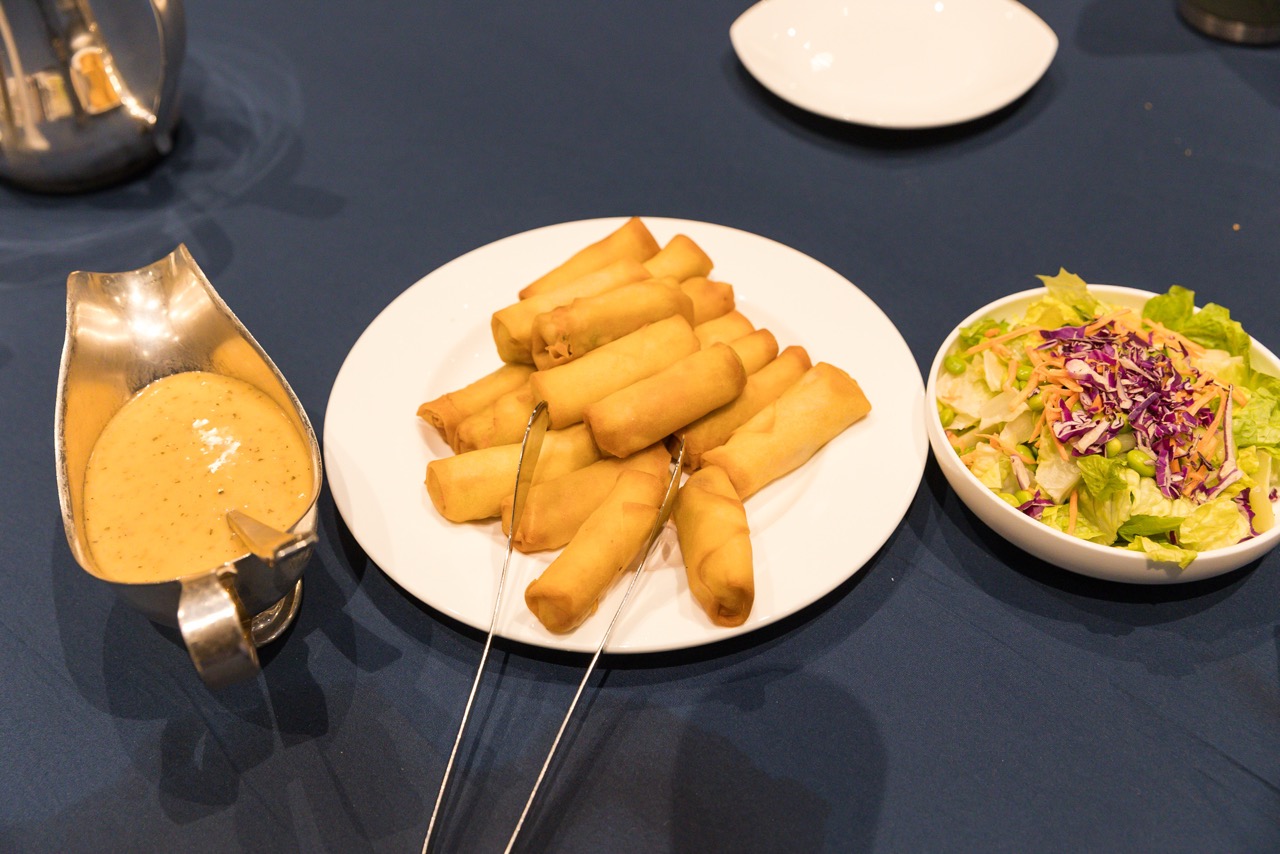
Either way, this Christmas, just like Elena Kagan and many generations of Jewish immigrants, I can be found in my favorite Chinese restaurant. If you’re new to this tradition, give it a try! You’ll be tapping into generations of Jewish culture that you may have been completely unaware of. My Jewish Christmas features egg rolls rather than eggnog, and I have generations of Jewish history to thank.
Explore More Stories

Vestibulum hendrerit ornare augue, nec hendrerit tortor suscipit at.
Maecenas eget commodo odio, non interdum lorem. Phasellus quis tellus dignissim, ornare velit et, auctor augue. Suspendisse volutpat orci sed velit dignissim, eu consectetur ipsum posuere. Morbi nibh diam, facilisis sit amet lectus quis, fermentum congue erat. Proin eros lectus, posuere id luctus in, blandit vitae metus. Morbi at eros sed tortor accumsan vulputate eu vel ex. Cras gravida fermentum est et imperdiet. Integer eu elit ac elit faucibus finibus.


Etiam eget nunc vitae urna maximus dignissim eu vel est. Nunc non tortor arcu
Phasellus mauris quam, varius sit amet erat in, volutpat maximus purus. Etiam eu orci suscipit, semper enim ut, fermentum erat. Duis vel eleifend orci. Suspendisse ultrices erat sed lacus luctus varius. Ut lobortis ipsum a mattis bibendum. Praesent sit amet odio nisi. Integer elementum ante et lorem gravida, quis facilisis risus lacinia. Nullam eleifend convallis lorem quis euismod. Aenean quis sagittis sapien, at sagittis ipsum.

Connection
Suspendisse ultrices interdum porta. Morbi ante nunc
Aliquam pharetra leo cursus urna semper luctus non a elit. Etiam tristique ante in lectus maximus, a hendrerit justo iaculis. Duis hendrerit arcu turpis, vel finibus nisi sodales in. Donec ut felis ex. Quisque blandit mauris ante, sed egestas massa vulputate et. Integer maximus, ipsum non faucibus tincidunt, diam lacus mattis mauris, et porttitor augue dui eget erat. Nullam scelerisque dolor in velit pulvinar egestas. In hac habitasse platea dictumst. Nam in purus ornare, feugiat massa eu, viverra orci. Suspendisse efficitur ex eget consectetur tempor. In pulvinar ligula ut auctor rhoncus. Maecenas tempus eros tortor, non convallis elit scelerisque non. Duis sagittis molestie luctus.